03
Defining Customer Value for Digital People
Soul Machines · Group Product Manager
Replaced "digital people can do anything" with the company's first coherent product-market story, building value frameworks that shifted the business from technology-first to problem-first and still guide product, sales, and marketing today.
Context and challenge
By 2023, the market for conversational AI was rapidly evolving. Our technology for creating digital people was powerful and flexible, but that flexibility brought its own challenges:
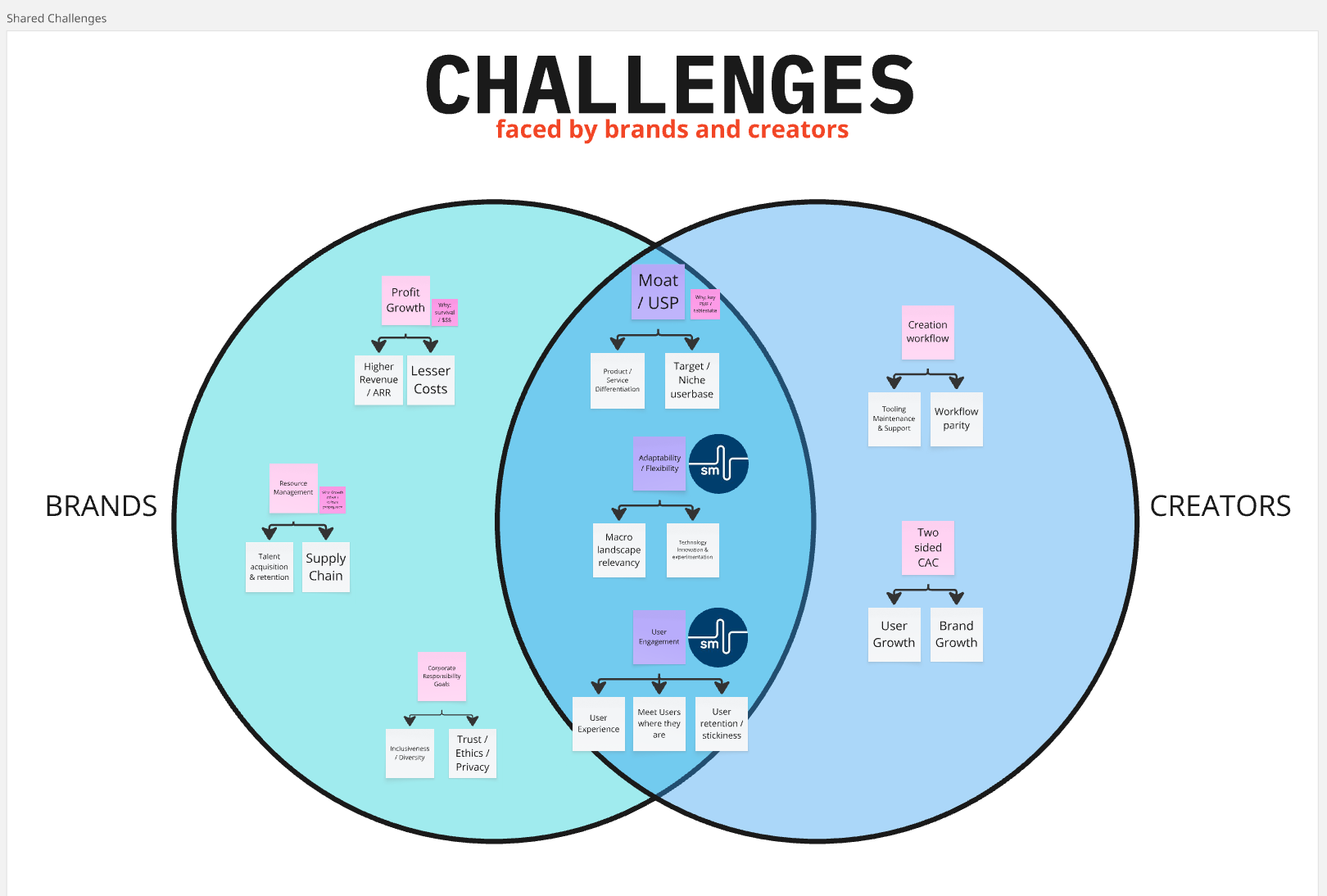
- Too many possibilities: digital people could be applied in a wide variety of industries and use cases, which made it hard to focus on the highest-value opportunities.
- Fragmented platform: because the company was responding to diverse customer requests, we had built a broad but disjointed set of capabilities.
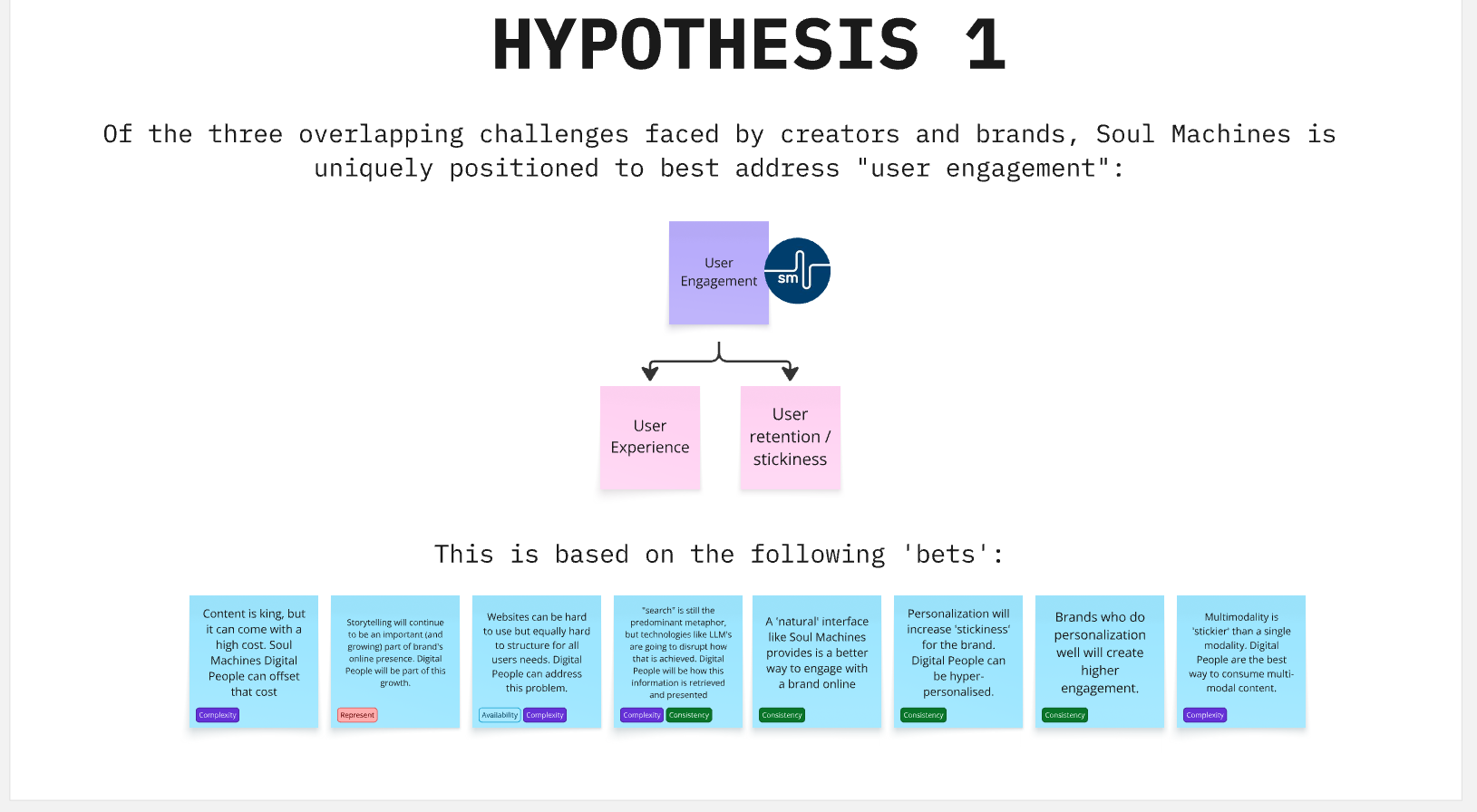
- Unclear value narrative: without a clear articulation of where digital people create repeatable value, it was difficult for sales, marketing, and product to consistently tell the same story.
The result: while some customers were realising significant value, it was not clear which use cases could be scaled or repeated.
My role
I led a comprehensive body of work to define where digital people actually add value. My role involved synthesising commissioned research that had been shelved, reviewing customer interviews and usage data, evaluating all existing use cases across our customer base, and building new frameworks and tools to guide product, sales, and marketing decisions.
What I did
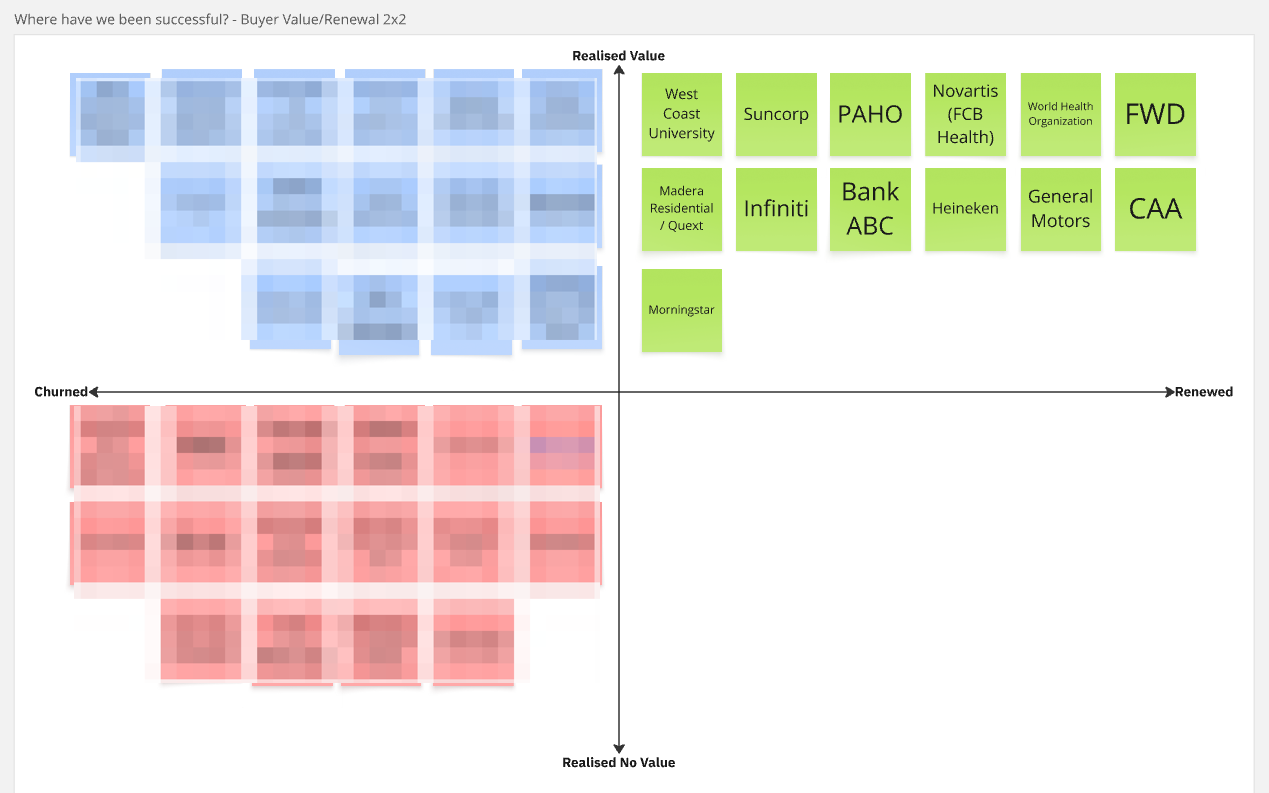
1. Customer Value Mapping. I developed a 2x2 framework with two axes: Renewed vs. Churned customers, and Realised value vs. No realised value.
- Success cluster: the strongest cluster was "renewed + realised value," proof that real, repeatable value existed.
- External factors: "Churned + realised value" was largely outside our control (budget cuts, reorgs, sponsors leaving).
- Baseline insight: when customers saw value, they stayed. This gave us a factual foundation to build on.
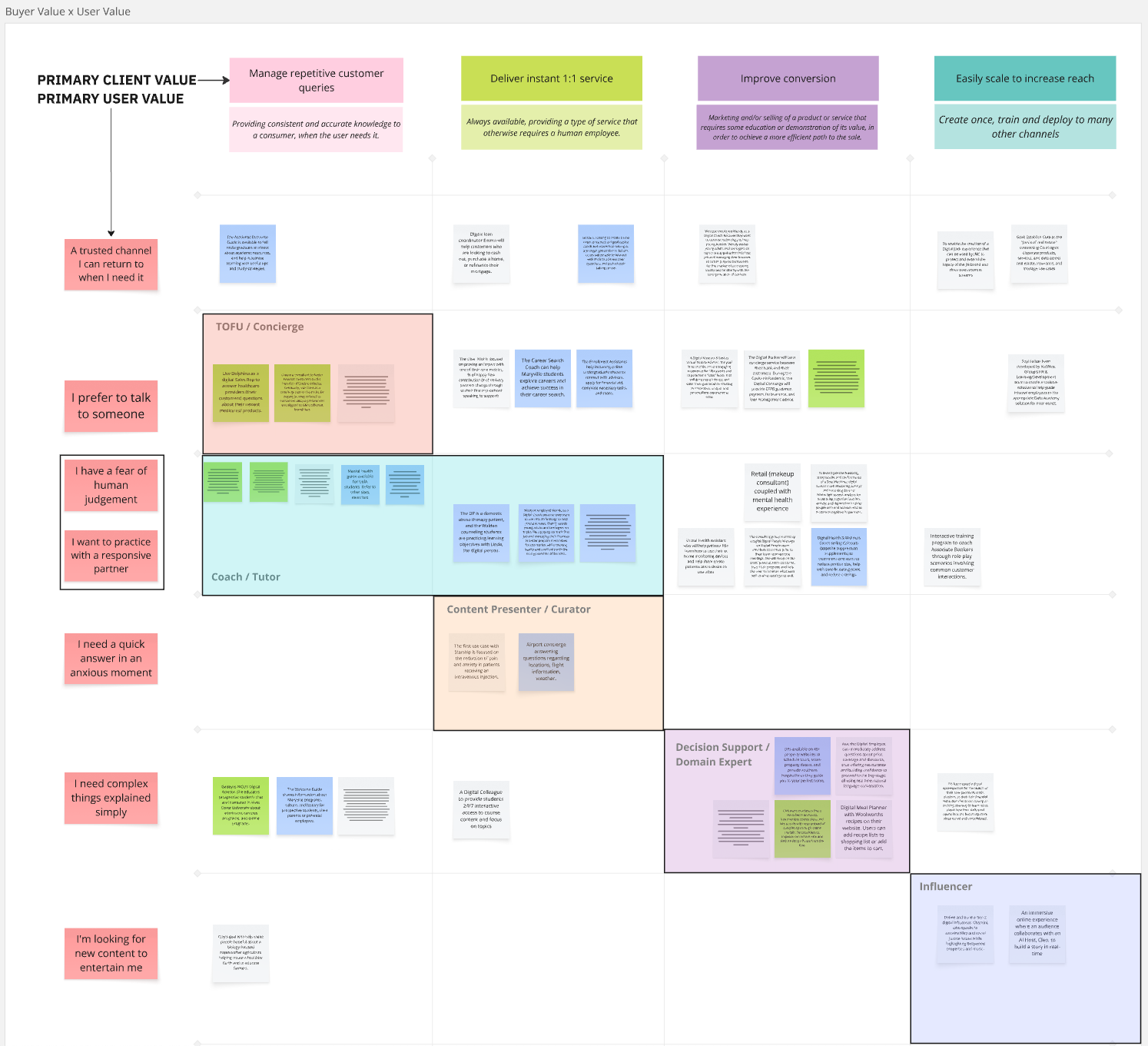
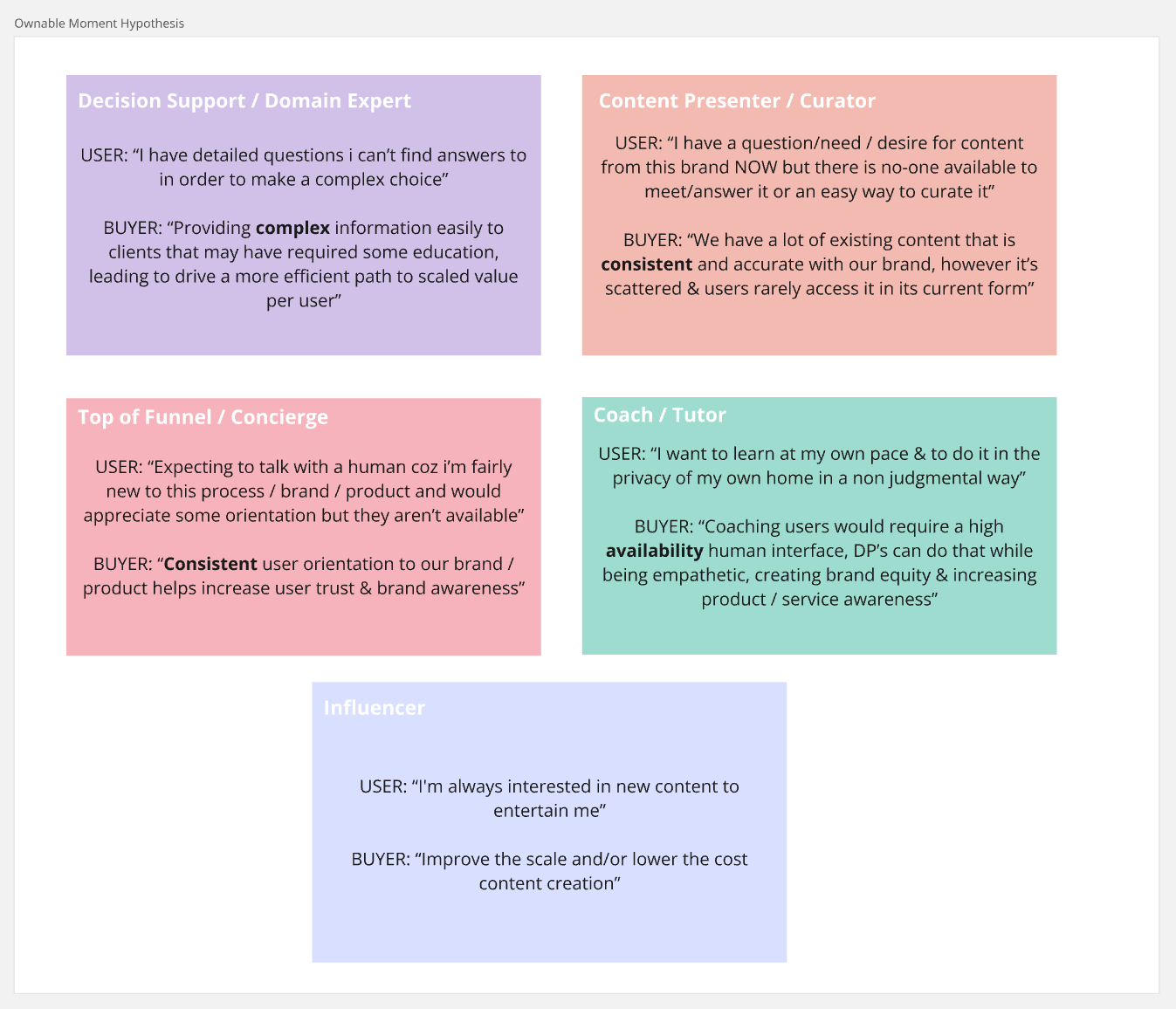
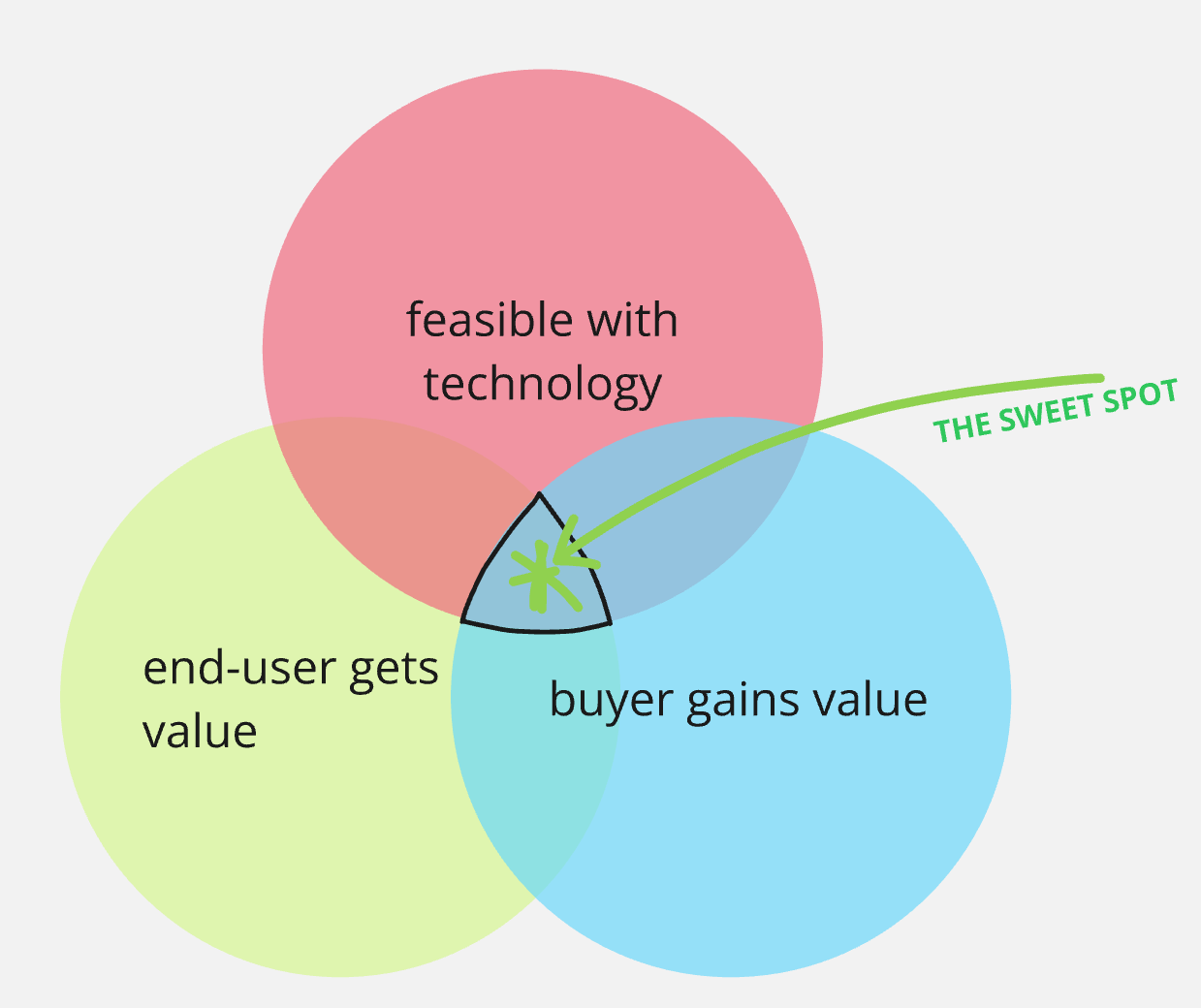
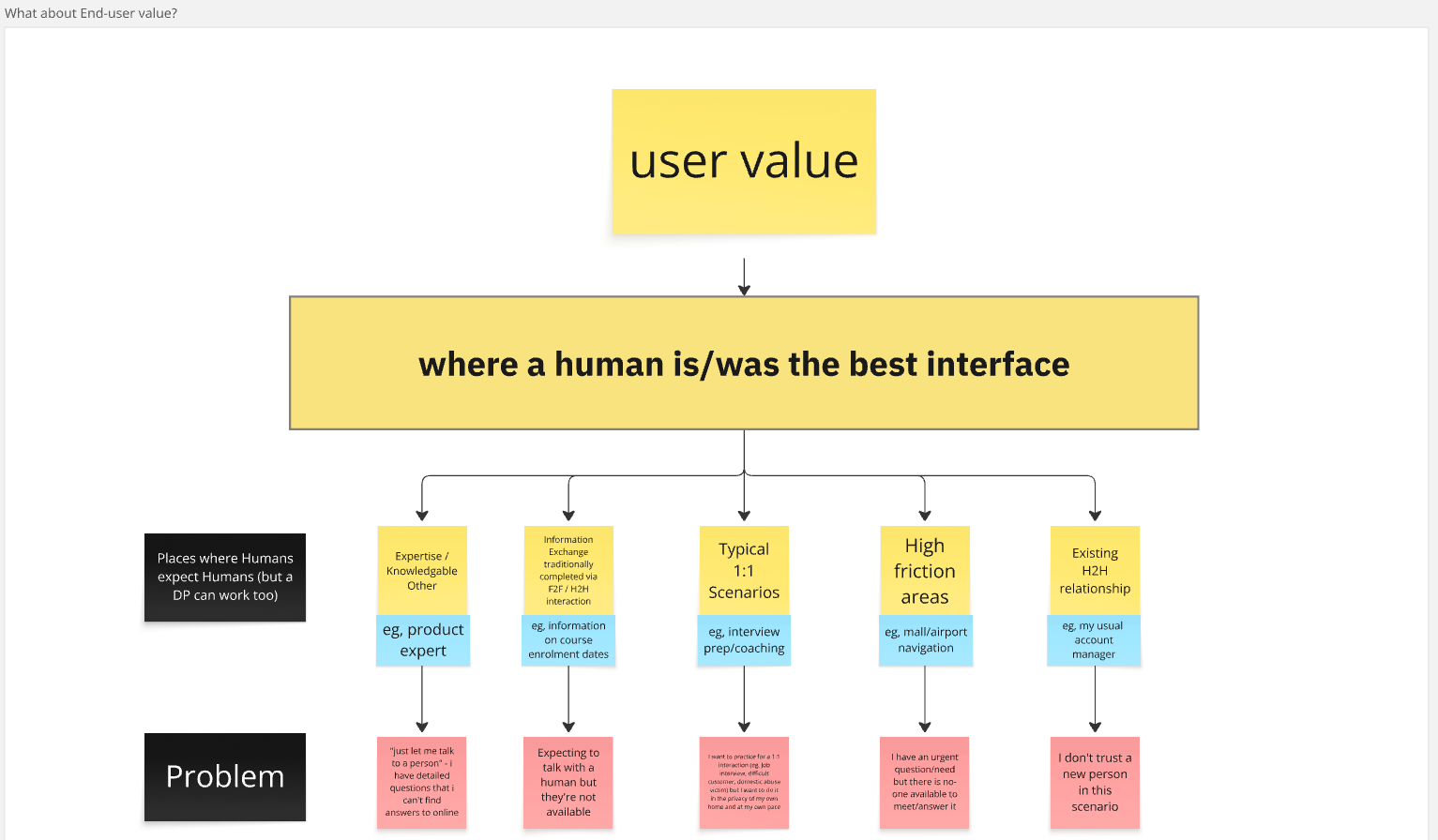
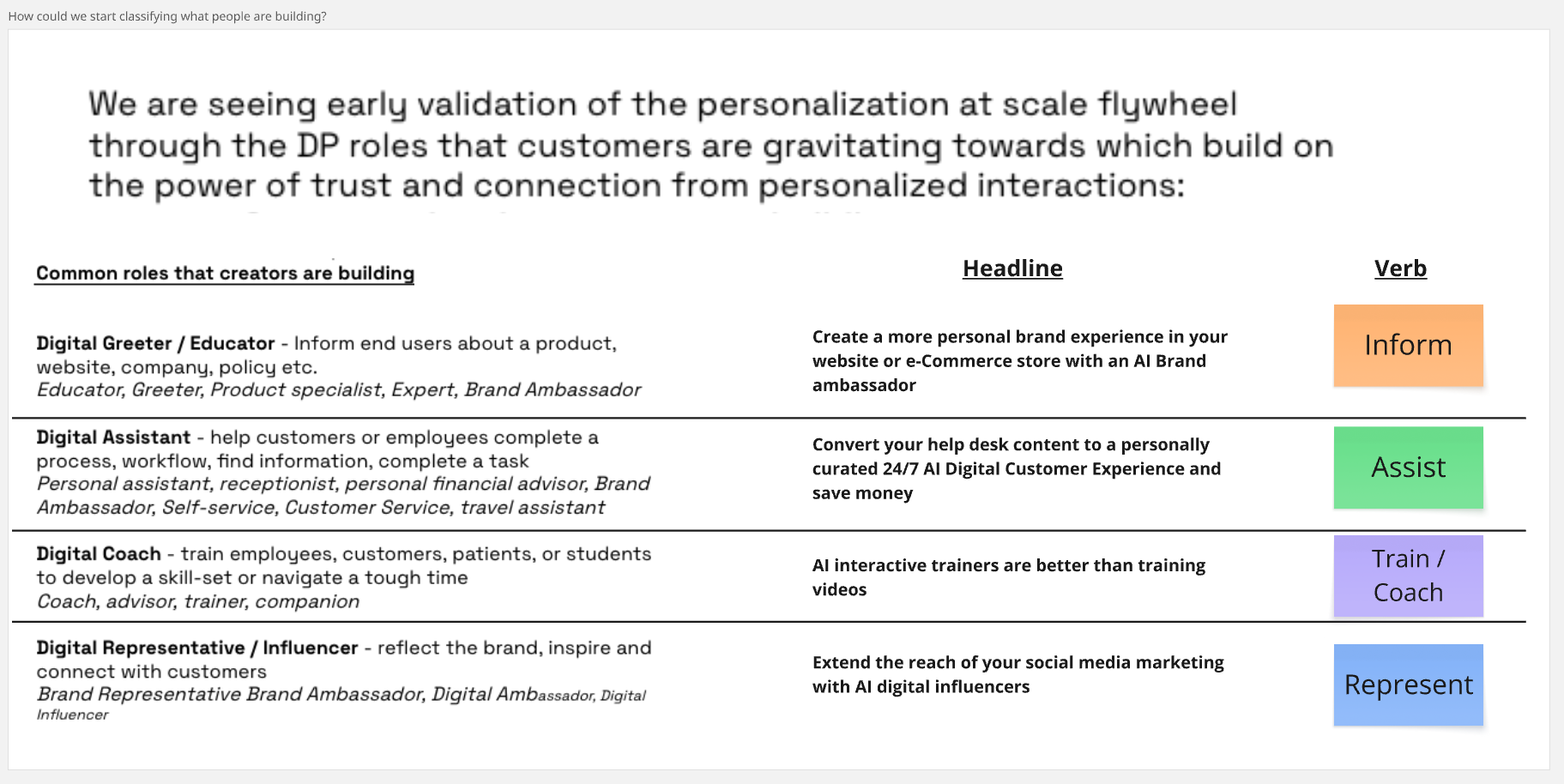
2. B2B2C Value Framework. I created a second framework to bridge the customer's business problem with the end-user's outcome, asking two key questions: What was the customer trying to achieve? What was the end user actually getting from the interaction with the digital person? By mapping all successful customer use cases into this model, I identified archetypes of successful deployments where our technology was uniquely capable, the customer had a pressing problem, and the end user derived clear benefit. We called these "ownable moments."
3. Framework Implementation.
- Product alignment: guided which templates we built into the platform, aligning features with proven archetypes.
- Sales enablement: equipped the team with clear messaging and frameworks to steer conversations toward high-value use cases.
- Marketing focus: anchored campaigns around customer problems and end-user benefits, not vague promises of "digital people can do anything."
Results
- Cross-functional alignment: created alignment across sales, product, and marketing around real value delivery.
- Improved customer fit: reduced scattershot selling and improved the quality of customer matches.
- Lasting framework: provided a language and framework still used internally to evaluate new opportunities.
- Strategic pivot: gave the company a north star for where digital people add value, a fundamental shift from technology-first to problem-first thinking.
- Product-market narrative: this work gave the company its first coherent product-market story.
Why it matters
This work represents strategic product leadership at its core, moving beyond feature delivery to fundamentally shape what a product is and where it creates value. I demonstrated framework creation to bring clarity to complexity, cross-functional influence by aligning research with go-to-market execution, and customer-centric thinking that transformed "we can do anything" into "here's where we uniquely add value." It was a turning point that showed me product management isn't just about building and shipping: it's about defining the very identity and strategic direction of a product.